Tuesday, 6 March 2012
Peta's Use of Violent Sex as a Selling Point
Sunday, 4 March 2012
Less is Not More When It Comes to Black Women and the Media
In her piece Coren sites the fact that ‘in the survey, 67% of "overweight" black women said they had high self-esteem, compared with only 41% of "average-sized or thin" white women’. This is chalked up as evidence of the fact that black women need not ‘complain’, as we have been doing for so ‘long’, about the near lack of representation of us in the beauty industry. Despite bemoaning the fact that not enough black female figures are used in the ‘women’s market’, she tells us that ‘the bigotry in fashion, cosmetics, advertising, TV and Hollywood hasn’t damaged black women, it’s saved them!’ That is truly a bold statement to make, especially by someone who has no real experience of what she is writing about.
Any black person will tell you that the skin lightening industry is alive and kicking both here and abroad. Walk into any cosmetics retailer specializing in products for black people and you will find a wealth of creams declaring they will make you the lighter, brighter you, you have always wanted to be. And sadly, for far too many black people, that statement is in no way ironic. In India alone, the skin whitening market is growing at a rate of 18% a year. The nation’s leading research organization, AC Nielsen, believes that this figure will rise to 25%, making the market worth approximately £272 million. Globally the market is set to reach an estimated £6.3 billion by 2015. Yet, for Coren, black women are ‘mad to keep campaigning for greater visibility in Vogue or light entertainment, now it's clear that absence has made a lovely free space for them to form their own healthy self-image.’ Wishing that you are whiter and being willing to risk your health for the sake of doing so is not my example of a ‘healthy self-image’. Declaring to the world that it is a petty and ridiculous desire of black women to link our lack of representation in the media to these deeply harbored and negative self-images is, ever so slightly, annoying. It’s like someone adamantly insisting you’re absolutely fine when you know you’re not.
Coren goes on to argue that the fact that 68% of black women say it is ‘”very important’ to have a successful career’ as opposed to 45% of white women is testament to our ultimate well being. Not a second thought is given to the fact that this figure might be related to class. Could it possibly reflect our understanding that as women from, predominantly, working class backgrounds we recognize that financial independence is of paramount importance? The precedent being set by many of our mothers who continued to work as a necessity when their white counterparts could afford to stay at home. Therefore, could we just possibly take it, not as a token of our adamantine ability to emerge unscathed by prevailing beauty norms? Is it more a marker of how we have been triply disenfranchised through race, class and gender, recognize this and are resolute in doing something about it?
Neither does Coren understand the fact that though 62% of black women consider it ‘very important’ to have ‘free time to pursue other interests – compared with …55% of white women’, this does not necessarily mean that we are unbound from assiduously trying to reach the very distant ideals of white beauty shoved down our throats on an hourly basis. Ask any black woman with straightened hair, that’s many, Victoria, if you didn’t know, and you will see that in fact, we are OBSESSED with Western notions of beauty. The truth is that many of us, in order to retain the mystique of long, straight white hair, will forgo activities we love, like swimming, for the sake of maintaining a beauty myth that insists on perceiving our natural hair, out for all to see, as a sign of rebellion or attitude, rather than just another hair style.
As a white woman, Coren in what is well intentioned, wants to reassure us, in the way often, only white people can do, that black women really do need to stop complaining, things aren’t as bad as we think they are. Well, my answer Victoria is that I think we’re the better judges of that. We need more black women in the media affirming the fact that black is beautiful and intelligent and all other positive adjectives you can think of that we are never readily attributed to us.
by Lola Okolosie
Black women need more good, not less, media representation
Hi Victoria Coren,
I think I might be one of the black women you are talking about in your article.
I’m a black British Caribbean woman. I’m not overweight, but I do feel confident in my body. However, this is not because women of my ethnicity are seldom represented in magazines, media, public life. I think having some sort of (broad and diverse) representation would help people to make sense of me and stop my having to make all sorts of declarations, and overtures to show and prove things about myself, because it’s so tiring and I don’t particularly want to have to disavow elements of my culture to do that. I wish there was a black girl in the media who liked reggae music and hip hop AND also went to uni and had a professional career afterwards and had white friends. I think the media plays a role in explaining that is possible, but instead I have the responsibility of showing that. Therefore, the media is doing a disservice to us. It creates a void of representation that can be misappropriated and is therefore disempowering. A very recent Guardian piece showed ‘models breaking the mould’. One black woman was featured, for her skin colour. That was it, for her skin colour. The white models could be older, plus size, and feminist. The black model could be black. I would like to see black models who are also older, feminist and plus size. I would like us to be mainstreamed in all of our glory and not constantly marginalised.
I do feel quite confident in my body, but this is despite the lack of discourse that highlights me as being attractive. I feel that lack acutely, actually. There is harm done to black women because of the conspicuous lack of acknowledgement that we are attractive beings. I was born in the 80s, but as a child I felt just as those children did in the 1950s experiments that showed black children of 3 and 4 despising black dolls and complimenting white ones. At aged six I was wishing for other things, too, to look like the girls on the cover of Sugar magazine, to be called Shelley, to have hair that blew in even light wind.
After reading your article Victoria, I felt as though you were pushing the message that white women are the victims and that black women somehow had it good BECAUSE we are marginalised. I find that hard to swallow.
That is always going to be a difficult, and patronising, argument to make. If we must look at things with sanguine specs on, I would say that instead, those particular stats suggest maybe that black women are trying to adjust themselves in incredibly hostile environments and a proportion of them appear, at least on the surface, to be doing this quite well. However, just a cursory look at the country’s mental health service will show you that black women have it so hard that some of us just can’t handle it.
I think this is where the interesting link with some of the other stats you mentioned comes into it. 68% of black women think it is ‘very important’ to have a successful career. I’m not so sure this is very much to do with lack of black models in magazines. I think this is probably a lot to do with the fact that when times get hard – like now - we often find ourselves among the first to be made redundant. Last year, my friend told me how her team of 20, with 7 black women including herself, announced redundancies and 5 black women and 1 white man had to go. My friend, and the PA to the director were the only two black women who stayed. Job instability for black women is a real concern. For example, in local government the majority of fixed term contract workers, as opposed to permanent employees, are ethnic minorities or younger women. According to the Scottish national census in 2001, the employment gap between ethnic minority women and white women was 21%, despite the fact that younger ethnic minority women are more likely to have first degrees. For example, Indian women under 34 were twice as likely as their white counterparts to have a first degree. Black women can’t afford to treat their careers, when they have them, as anything less than ‘very important’.
55% thought it important to have time to pursue other interests…. I’d like to know what these interests are. I’m not sure these are all lunching ladies, or those taking up hobbies as serious leisurely pursuits. ‘Other interests’ could very likely be caring for the elderly, physically and emotionally supporting friends and family who have little recourse to public funds, engaging in long hours of homework to supplement the deficient education their children receive in institutionally racist schools, joining community organisations like Saturday Schools and support groups, or simply getting up to speed on the law so that they can ‘work effectively’ with the police when they pick up their sons. Most of the black women I know spend their time helping others, frankly. As oppressed minorities we need to. I know that this doesn’t make as pretty an article, but I’m concerned at your superficial reading of those stats. I don’t think your article represents black women very well, in your article it sounds like black women are having it good, and that rings alarm bells for me.
You also said 52% of white women think it's "very important" to be in a romantic relationship, compared with only 44% of black women and somehow that speaks to our ‘liberation’ – what from patriarchy? I really don’t think so. Not rating it as ‘very’ important, does not mean that it is not important at all! Black women, like most human beings, want love and affection and support and all of those things that are possible in relationships (and it would be helpful if we had some healthy black relationships represented in the media, too). While I would fiercely argue against black women ‘needing’ romantic relationships, as I would all women, it’s classic white mainstream feminism solipsism to assume that familial relationships are necessarily bad. The family for black women does not always mean oppression, and restriction. It can also mean supporting networks that are often dearly needed. Also, one could argue that a consuming concern with romance is a luxury!
I don’t think your article is fair to black women. I don’t think your article is fair to white women either, but I’ll let them take up that argument with you elsewhere.
Racism and the Media
| Proud and Prejudiced- Channel 4 |
My Hometown Fanatics, BBC Three, and Proud and Prejudiced, Channel 4, both focused on the Luton-based extremist groups the EDL and Muslims Against Crusaders. Another Channel 4 show about racism and multiculturalism is Make Bradford British; a Big Brother-esque two-part series that throws a mixed group of people from Bradford who failed a British citizen test into a house together to see if they can figure out “what it means to be British”. Yep, that age old question. Considering that we’ve been debating that for a while now it seems that they’ve been set up to fail really.
Now I have absolutely no idea why TV executives have decided that now is the time to discuss racism. Maybe they only just realised it actually existed. Maybe someone, a friend, acquaintance or even a passerby on the street, took them aside and whispered into their ear: “Oi you know that racism that you read about once. It still happens, you should do a programme about it.” Who knows how it happens, I suppose we can only imagine.
What I do know is that as a black woman who craves any type of representation in the media you would think I’d be happy that to have a debate about racism in Britain today on a nationwide stage. I would love that but I don’t believe that is the main aim of any of these programmes and that is why I was so desperately disappointed with all of them.
Make Bradford British sets out from the start deciding that multiculturalism has failed. I think that’s bollocks but everyone is entitled to their opinions not matter how much they frighteningly mimic David Cameron and his ridiculous world view. The housemates are all from a variety of backgrounds and are given the overwhelming task of deciding what it means to be British. Many of the housemates have their own prejudices and the programme is full of triggering and offensive language.
My main problem with the first episode is the way one of the Muslim housemates was set up to be the ‘problem’ of the house. Rashid was played out as the episode’s villain because he would not compromise missing out on praying at the Mosque to join the group on certain outings. Although he did finally give in and prayed while going out with the group, leading one white woman to realise that his faith and hers were extremely similar, I do not think the public will perceive him well. Rashid was portrayed in a negative light for the majority of the episode confirming many British people’s attitudes towards Muslims. I do not believe the one revelation about his character and faith at the end of the episode makes up for it. There is still another episode due to air Thursday 8 March, which could take a more positive turn but I do not believe it will because the makers of these shows are only interested in drama and shock value which leads me to the other two shows.
My Hometown Fanatics featured BBC Three presenter Stacey Dooley talking to the EDL and extremist Muslim groups with the aim of finding out why extremist groups are popping up in Luton. As you’ll probably be able to guess Dooley comes to no clear conclusion and, due to her truly terrible journalism skills, probably makes things worse.
Instead of taking a clear, rational look at what both groups had to say and using their own contradictory and nonsensical words to trip them up with Dooley decides to argue with every person she sees even going so far to say that it’s a “shame” that some Muslim women protesting had been rude to her. A “shame” is it. That a few women have in your eyes brought down all Muslim women because of what ‘they’ said. That’s a whole other blog post that I will tackle later because this one is already far too long. All the viewer learns from this programme is extreme, radicalised views that are great for getting annoyed at but do not actually tackle the real problem in Britain.
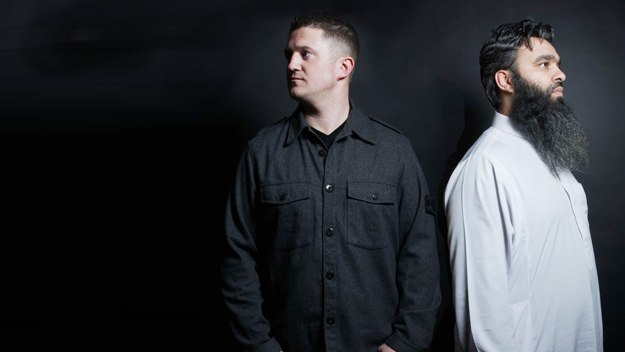
Proud and Prejudiced takes a slightly more removed view but still has the same result. The opposing groups both had chances to show themselves and show themselves up, which they did. The EDL leader, Stephen Lennon, repeatedly claimed that the EDL were not a racist group yet when Lennon brought out an Asian EDL member to speak at a rally the crowd turned, spat out racist remarks and several fights broke out. In turn Muslims Against Crusaders had their remarks countered by another member of the Muslim community who says the leader, Sayful Islam, did not know as much about the scriptures as he claimed.
In the end all three programmes are made for entertainment rather than to actually inform viewers. Producers will focus on drama and extreme views, which people can talk about in the office the next day, rather than a frank discussion on race.
What I would like to see is an hour dedicated to a roomful of people, a moderator and the free flow of ideas, experiences and values. Not to say that this would bring about the end of racism as we know it, but wouldn’t that be lovely, but it would at least inform the nation about what’s really going on in the lives of black people in Britain today. A safe space to take part in an honest discussion is the stepping stone to first understanding what racism is and then to breaking it down. But, I guess that would be boring to watch, or would it.
By Stephanie Phillips
Saturday, 3 March 2012
Philippines FHM Retracts Racist Front Cover
by Donalea Scott
Was surprised and very disappointed to see that a non-western country such as the Philippines would conceive such a magazine front cover that is not just racially sensitive but is depreciative of black people by assimilating the colour of black skin with that of darkness, immorality, bad/evil in contrast to the white skin of the posing native actress Bela Padila as being good, godly, virtuous.
With the magic of lighting & photoshop in this day and age I really don't think it was necessary to use black models in the shoot (the model on the right, standing doesn't look naturally black which would make it worse if they painted her that colour) to achieve the theme conveyed in its tagline of 'stepping out of the shadows'.
Guess it shows Philippines assimilation with western cultural ideals on race and (female) beauty, though kinda obvious with the fact that they actually have their own edition of FHM, a western lads mag!
Am glad the cover was pulled as I think the tagline was very offensive. What do you think?
This article originally appeared here, reprinted with permission.
Friday, 2 March 2012
IN DISCUSSION: racism directed towards someone else expressed to you
We’re starting a new ‘in discussion’ style of post, publishing some of our thoughts on a topic that we’re talking about.
Chaya
A few days ago on my way to work, I was waiting at a bus stop. A woman was complaining about buses (as people do) then about bus drivers, saying something along the lines of 'a lot of them are Asian and they're as common as muck.' She said some other things too. Of course then the bus came and two Indian men jumped up to offer their seats to her.
In the grand scheme of things, it wasn't a big deal (although it did lead me to fume along the 'them' and 'us' variety for a bit – not helped by the fact that I was listening to a Gil Scott-Heron album). The incident made me think of how often white people say something racist to me about someone else - in this case it was the same ethnicity as me (assuming she meant south Asian when she said Asian) but it also happens about others as well e.g. those African people, they're all drug dealers etc. I had someone a few weeks ago (white, middle class, privileged in other ways too man) tell me how wonderful colonialism was for everyone concerned and how all were working together for the 'common good' and we should go back to such a system. I just looked at him thinking, could you not realise that almost everyone in my grandparents' generation were freedom fighters, quite a few of whom spent time in British jails in India in the struggle for independence?
Every single time I wonder, how can they say this to ME? Are they just talking; they will speak to anyone in the vicinity and they don't notice the colour of my skin? Do they think I'm white - am I 'acting white'? Is this another use of their power and are they making the point of saying racist things to a black person? Thoughts?
Nicola
My mother used to get this a lot from colleagues in 80s & 90s. They would happily confide their racism to her, a black woman, followed by, "I don't mean you Rachel, you're not like them". Utterly astonishing. I think it is the colonial mindset of dividing non-white races into categories of acceptability...sort of like house slave/field slave divisions.
Pearl
I don't really get people saying racist things about other Caribbeans/Africans to me. I wonder why? I cannot imagine a white person in public saying to me 'all these drug dealing black people', 'all these stupid black people'. I really really really can't. Can't imagine it. I think that might be fear (of black people). I think maybe in the work place where they feel they are safe, they might (cf. Nicola's mum?) OR if they are on the tram in Croydon ;)
I get lots of homophobic statements that I don't always challenge, I think that is because people think that because I am African/Caribbean, I must be an ally in their prejudice, or something. I hate that. I'm not an ally in anyone's prejudice, don't make me complicit.
Rajitha
This is reassuring/disturbing to hear that this happens to other people too. I get this ALL the time and recently more and more as I’ve been doing some public facing work (totally not race related but people will always find a way to have a rant about what is on their mind apparently). I’m very obviously not white and comments are generally directed towards another race, but it does make me wonder. I believe the fact that I sound very English might have something to do with it, but that doesn't explain the irrationality of it.
I think it's partly to do with de-personalisation of 'the other' so when they actually speak to one of these 'others' the connection is not registered but then I also think it is to do with the fact that many people who consider themselves to be open minded and fair thinking do actually have some deep set racist opinions that they don't register as racist and offensive. This is often the case with younger people who say such things - they would be shocked if you pointed out how racist they were being.
Who knows? For whatever reason it is, I find that I really don't know how to react to such comments. On the one hand I am supposed to stay more or less detached for the job, but then even in non-work situation I generally bite my tongue for fear of winding up whoever and actually reinforcing their frustrations. Perhaps it's better they say it to me than to someone who agrees?
Pearl
Hmm, I don't have personal experience, but in this political and social climate, I can't imagine (not saying it wouldn't happen) a white person saying to a Middle Eastern looking person 'oh, these Muslims driving the bus are all thick', so the offence and prejudice is so many fold here, I think.
Racists need to fear us? This kind of thinking reminds me of the Malcolm X type philosophy, it had its uses and was very powerful (though I know it needed MLK etc to work, they needed each other…)
Yasmin
When I lived in Bradford during my teens I got the same thing often about South Asian people, although the people talking about them wouldn't refer to them as that. Comments would go along the lines of 'I'm not being racist but those P**** are...' And like you Chaya I'd wonder of they couldn't SEE that I would not be okay with them trying to make me complicit in their racism. I agree with Nicola about this being a divide and rule strategy in which you're supposed to feel a sense of pride that you have been deemed 'a good little blackie'. This sort of racism works on the assumption that it can't be challenged because a) you have been allowed into the magic circle of what these sorts of white people think about some, if not all, black people. As though that was a massive secret to us! b) because when challenged it becomes political correctness gone mad cos 'I'm only saying what's obvious
I have also found that people think it's ok to say some really anti-Semitic stuff around 'Jews love money' and were surprised that I went as far as defending Jewish people. Apparently I'm only supposed to be bothered about gender and blackness. All other forms of oppression are closed to being against them!
Please do carry on the discussion in the comments below. Do you have any thoughts? Does this happen to you? What is your reaction?
Thursday, 1 March 2012
Hard Being Black In Hollywood, Try Being A Black Woman