Friday, 12 August 2011

We Need To Listen

By Lola Okolosie


In the spirit of Charmaine’s post, what I have written below is not in support of looting but is my way to try to understand…


I had been ill with an agonising abscess at the root of one of my molars throughout the whole London/UK rioting; it meant that I wasn’t able to talk, or in anyway feeling inclined to socialise. For those five days, I was a near mute listening/reading any news about unfolding events. I mention the fact because I think it provides an apt metaphor for both what has happened in the last week and what should follow in the coming weeks, months and possibly years.


The riots are about Britain’s deeply unequal society, pure and simple. Be it a discussion about poor parenting (often linked to poverty, yet successful schemes like Sure Start, providing excellent early years parenting support and advice, now face sharp cuts to funding under this coalition government); poor education (again, often linked to inadequately resourced schools in areas of deprivation, yet Education Secretary, Michael Gove’s Schools White Paper clearly delineates the ways in which the coalition are attempting, as they did with the NHS, to create a market system in schools leading to the increased ghettoisation of many primary and secondary institutions across the country); or a poor moral outlook, we inevitably return to inequality. Indeed, it is evident that one set of ‘bad morals’ are worse than others if the sentencing of MPs who fiddled their expenses in comparison to looting rioters is anything to go by. Compare the sentence given to former Labour MP, Jim Divine, who received a 16-month custodial sentence for ‘looting’ £8,385 from public funds to that given to 21-year-old student, Nicolas Robinson, for stealing a £3.50 bottle of water- 6 months. Both men were defendants who, prior to their sentences, had no criminal records. The inequality in their punishment speaks for itself.


These riots demonstrate the ways in which, forgive me if it seems trite, the abscess of inequality has come to announce its painful presence to a society which is largely ignorant of what the word means for millions who live on the breadline. The appalling Commons debate on Thursday in which seemingly intelligent politicians tabled proposals around the curtailment of benefits for rioters, demonstrates that this country is categorically unwilling to have a discussion about inequality and its impact on social cohesion. Rather than do as I did with my abscess, stop and listen, our nation is caught in the grip of wanting to fight fire with fire. The mindlessness of the violence and looting we witnessed screams that we need to LISTEN. The sheer fact that a clearly evident anger and frustration at the system, by a largely poor and disenfranchised conglomeration of individuals, was articulated in this most inarticulate of modes, begs us, that’s right, the British public, to seek to interpret, enumerate and analyse these gabbled messages.


Yet that is not what is happening. I am as sickened and saddened by this fact in much the same way as I was by some of the footage of people wrecking their own neighbourhoods.


True to form the British public is looking for a scapegoat and true to form it appears in the visage of that age-old bogeyman, the young black boy/man. Forget the fact that this is an individual who, by virtue of being himself, young, black, invariably poor and male, places him at the bottom rung of society’s ladder (see statistics on educational attainment, employment, life expectancy, mental health, prisons below). On Thursday, when news first emerged that police had shot and killed Mark Duggan, the pictures circulated on TV and newspapers, the erroneous detail (from the Daily Mail) that he had shot a bullet lodged in a police vehicle attempted to frame him in the very same light: violent young black man corrupting social order.


I won’t even begin to mention how the looters and rioters were NOT a homogenous group but instead a reflection of the melting pot deprived communities of London; young, old, white, Asian, black, male, female, you get the idea! Once again, young black men are now, despite being one of the most disempowered of individuals being bandied about as the real scabs of British society. The real problem in Britain is not the bankers who have taken £3 trillion of British taxpayers money to continue their selfish acquisition of wealth, which they will distribute amongst an infinitesimal proportion of the population, no. It is not politicians who have, through MPs expenses and the News International scandals, shown time and again that they are a group of individuals with vested interests who will only argue the public’s corner when it is expedient to do so, no. It is not the police and media, named and shamed as having been engaged in a corrupt and criminal collaborations over phone hacking, no. It is those at the very bottom of society with no constructive means or avenues to articulate their position. Maybe my metaphor of an abscess is inadequate; they work from the bottom up…


The Stats


“The lowest levels of GCSE attainment were among Black Caribbean pupils, particularly boys. Only 27 per cent of Black Caribbean boy achieved five or more A*-C grade GCSEs…The permanent exclusion rates for pupils from the Other Black, Black Caribbean and Mixed White and Black Caribbean groups were 42 pupils per 10,000, 41 per 10,000 and 37 per 10,000 respectively. These were up to three times the rate for White pupils.” – Office of National Statistics


“Studies show up to 7 times higher rates of new diagnosis of psychosis among Black Caribbean people than among the White British.” – Parliamentary Office of Science and Technology


“London-wide, life expectancy is currently 75.7 for males and 80.7 for females, compared with 76 and 80.6 for England as a whole. But for males born in the boroughs of Lambeth, Southwark, Lewisham, Greenwich, Camden, Islington, Hackney, Tower Hamlets, Newham, and Waltham Forest—all of which have significant ethnic minority populations—life expectancy is one year less than the average.”- British Medical Journal


“Infant mortality in seven London boroughs with a high ethnic minority population is 7 or more per 1000 live births, considerably higher than the average of 5.4 for England and Wales. “ – British Medical Journal


“Among men, those from Black Caribbean, Black African, Bangladeshi and Mixed ethnic groups had the highest unemployment rates (between 13 and 14 per cent). These rates were around three times the rates for White British and White Irish men (5 per cent in each case). “- Office of National Statistics


From the Office of National Statistics Black British people make up 2% of the British population, we can thus crudely assume that black men constitute 1% of that group yet they make up 15% of the prison population. Last figure from Transform Drug Policy Foundation

Wednesday, 10 August 2011

I loot, therefore I am

by C


‘Getting mine’ appeared to be the mantra of the London civil unrest / uprisings / lootings / riots (delete as necessary). It wasn’t action against the police, or fighting the system, it was ‘getting what’s mine’ carpe diem style.


I’m not an apologist for what has unfolded in many parts of London and the rest of the UK over the past few days, but like Chris Rock says (and I am not a woman to quote Chris Rock) I’m not saying they should have looted, but I understand.


I know I need to explain, it starts with a little story, so here we go:


I grew up young, black with not very much money in London. During the summer holidays I used to work in town on Bond, Oxford and Regent Streets, the nearly very expensive squares on the Monopoly board. I could really only go to these places at night to rave, when the West End was turned over to us (ironically that is now the City – bankers by day, black ravers by night) or to work at the weekend in order to be just about able to afford anything in the very same shop that I worked in. In other words, I knew that this place, the pride of London, was not for me in anything but a tangential sense - get in, work, get out. Memorably, I took a trip to Selfridges one afternoon to visit a friend and was struck by advertising slogans that said, a la Barbara Kruger, ‘I shop, therefore I am’. And I couldn’t help but wonder that as I couldn’t actually shop, ergo what?


And this is what I think was at the heart of what happened in London on Monday. Apparently we are what we shop, what we have, or if we have no means for real, consistent, reliable access to this in a legitimate way, we are what we can loot. Without these things, we are nothing and nobodies. Trainers, clothes, mobiles, ipods, macs – possession of these things are tantamount to human rights in the UK, with a dominant society that recognises people according to social class and money and for decades it has been very difficult for people particularly susceptible to poverty (working classes, ethnic minorities, women, young people) to progress socially or economically. For the past year it’s been impossible. No credit, no jobs, no other legitimate ways to get them, and at the very same time costs of basics are soaring – gas, electricity, petrol and staple foods like flour, bread, milk. Of course, some were still getting them, through crime, cash-in-hand jobs, mugging here or there, or petty theft. On Monday and Tuesday, this behaviour left the estates and no-go areas of London and moved into full view and force on high streets, and now we are calling it 'rioting' and 'looting'.


No, there’s been rioting and looting in some communities for a long long time, it’s just that no cameras were trained on it. I wonder whether burglaries and similar crimes will decline over the next few weeks in some (poor) neighbourhoods. I’m willing to bet no one will care enough to look at it.


It has been asked ‘how can these people do that to their communities?’ That’s the point; it isn’t their community. Up and down the country playgrounds are locked, basketball courts are locked, in Hammersmith the Tory-led council transformed a football field into a polo pitch (let’s not talk about the libraries, because yes, young people hung out there, too), and the jobcentres are being shut down. Whose community is that? It’s not theirs and there has been precious little attempt to open it up to them. The cuts have cut them out. These communities have not been sites of enjoyment for them in the large, they have been where the police harass them, teachers are prejudiced against them, bus drivers drive by, and potential employers just say no.


It has been asked ‘why don’t their parents keep these children at home?’ Maybe their parents are working two or three jobs to make ends meet (unsuccessfully), maybe the children don’t want to go home for reasons related to social and economic poverty and it IS summer time! For some of these children being outside of the home is safer, happier and healthier in the short term, bring on the sun. Many of them are hardly ever indoors, the streets of estates have long been home to throngs of behaving and misbehaving young (and not so young) people. It’s a problem now because they are becoming visible, in some areas it is the first time they have been seen on the high streets in any real number for years. You could be forgiven for believing that most of Camden, Clapham and Woolwich is a white middle class holding area for post-university home counties Tobys and Sophies to have extended sleepovers, because widespread gentrification masks the social malaise. We’ve all seen it, but it’s worth taking a look at the map that overlays the London riots map with the 2007 social deprivation map.


The London riots happened extensively in places where poverty and affluence exist cheek and jowl. Crime increases with the disparity between rich and poor, and for the last few nights of London rioting so did the likelihood of looting. Surely that doesn’t take a genius?


And then there is the police brutality. Mark Duggan was shot dead in broad daylight on Thursday, his family were pleading for information and got nothing. They peacefully demonstrated and still nothing, and then allegedly the police set upon a 16 year old girl and that galvanised violent disturbance and people up and down the country with riot in their hearts jumped into the fray.


In 1976 Roots was televised in the UK and that year carnival was turned upside down by riots. I watched Babylon on TV last week and felt a fire rise in my chest. A few nights later Tottenham set the riots in motion and the UK fell like dominoes. Go figure.


I’m not saying I condone the looting, I do not, but I understand.

Riot, rage and rebellion

Cross-posted from MsAfropolitan
 Riot, rage and rebellion
Mark Duggan
This is the picture the media is using to remember the man who unawarely, post-mortem, instigated the UK riots.
Some see what is intended – a dangerous black man making gun gestures.
To others, this is a picture of another ‘cheap’ black life taken unjustly and irreplacably.
Duggan’s family say, “We don’t want Mark portrayed as some kind of gangster. He was a good man, a family man.”
I also sense a man with a sorrowful, defiant look in his eyes, an embodiment of a social system that nourishes difference. In a fragment of that type of society, a rebel.
For sake of clarification – I’m aware that the vast amount of the looters are opportunistic criminals. This article is not discussing that group, UK Prime Minister David Cameron and other UK politicians seem in fact to be addressing only those people.
I’m quite interested in discussing those young men and women that have that same lost look of defiance in their eyes that Duggan has in this picture. Those that set buildings on fire for the sake of it, that fought the police, those that literally went to war against society.
It is important that we try to understand those young people. However, by the look of things, that discussion will not be held in any mass forum, or what do you think?
Life’s cycles sees adolescence as the stage of life when we unprecedentedly are susceptible to injustice because we are coming to see the world with independent eyes for the first time. Adolescence is also a time when we don’t always know how to deal with pain internally.
We have much to learn from the youth therefore. If we are the conscience, they are the shadow of our conscience. And right now, a considerable amount are reflecting something foul, a recurrent rotting wound.
These youth are a reminder that you cannot dress up in bubble wrap, protecting yourself from the sharp edges of reality. Pop the bubbles, it will make you feel lighter. Metaphorically speaking, our adolescent shadow does not harbour this much anger for no reason. It is lazy to see the animosity as detached from our own actions.
A mature society would be able to deal with issues like the difference placed in the value of life. Or with non-inclusive gentrification. And with people seeing crime in their community through racially segregated lenses, as I wrote in Hackney Citizen last year.
Personally, I feel rebellious too,I want these leaders to explain why a black life still seems to be worth less than a white life. Not only because I’m African, but because I’m human. Why did the police kill a young man who did not deserve to die? Why were people who peacefully demanded answers treated so unjustly?
I certainly don’t want to destroy anyone else’s life to prove my rebellion. Yet I don’t wish to crush the rebellion in some of these youth either, not even as they stand at my doorstep in all their threatening rage. What I wish, is that we could discuss this with integrity, okay address criminality with the muscular language so familiar to Prime Minister Cameron and his establishment; yes there is room for the draconian, militarily approach of theirs.
But who will address the kids who have been let down by a systemic failure to address inequality? Who will explain to them that the true meaning of rebellion is freedom, is love?
We shouldn’t even expect the same politicians or police who’ve been sleeping with media as recent scandals revealed to do it. Too many don’t want to disturb their comfortable reality, one where injustice is not something to be destroyed, nor rebuilt, at anyone’s inconvenience. Yet as history repeats, we must ask ourselves the questions, how much longer will we blind to our own shadows?

Menstrual Tales - Part One

by La Lyonne

Our recent on-line discussion about periods has prompted me to remember what my first period was like. I was eleven years old and had just started attending secondary school. I woke up as usual one morning, went to the loo and was panicked at the sight of my blood-stained knickers. I didn't understand at all what was happening to me. I thought that I was ill or that someone had come and injured me during the night, and that I was slowly bleeding to death. In a state of shock, I called to my mum and explained about my bloody knickers. She said I had to have a bath. I remember my mum using eggs whilst I was in the bath. I remember asking my mum how long my periods (because by then she'd given the blood a name) were going to last - a week? a month? a year? Her reply? 30 YEARS OR MORE. My eleven-year old brain could not compute. I remember my mum telling me that I couldn't bathe whilst I was on my period - despite the fact that I was having a bath at the beginning my first period ever. Hmmm. I remember my introduction to Dr. White's sanitary pads, thick and with loops for pinning into place. (You must remember that back in 1977, innovation and sanitary protection were not even remotely contiguous - it is arguable that the same is true today but that's another whole realm of discussion.) I remember emerging from my bath and drying myself off, getting dressed, and then coming out of the bathroom to see my dad and my older brother hovering about with eager anticipation on their faces. Were they happy? Did they want to say something? What, exactly? Brandy appeared and I was given some to drink together with the refrain "You're a woman now". It's taken me some time to understand what that means.

Sunday, 29 May 2011

Black women, beauty and advertising

by Chitra Nagarajan

I'm sure you all remember Satoshi Kanazawa's claim that "Black women are … far less attractive than white, Asian, and Native American women." Psychology Today has since apologised for the post and removed it from their site (hence, why I haven't linked to it but you can read commentary about it here).

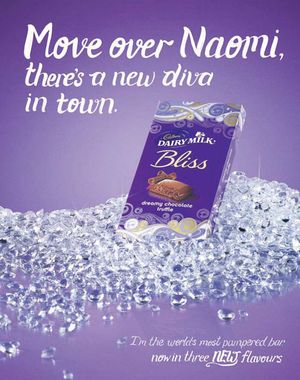
This week, comes the news that

Naomi Campbell is like chocolate...

...and Dove can make your skin become 'visibly more beautiful in just one week' (meaning of course whiter).


So not impressed.

Operation Black Vote has called for Cadbury's to apologise and withdraw its campaign and said the Dove advert reflects subliminal racial stereotypes in advertising.

What do y'all think?

Interview with Dan Tres Omi - a black male feminist


This interview was originally posted on www.msafropolitan.com
In honour of the 100th anniversary of International Women's Day, I caught up with Dan Tres Omi, a freelance writer and lecturer whose meaningful and powerful writing I came across in Clutch Magazine in a article titled Black Male Feminist – What Being a Feminist means to me. I wanted to ask him why he became a feminist and why he thinks women’s equality is important for men also.
1. It is the 100th anniversary of International Women’s Day (IWD) this year. What does IWD mean to you?
When I think of the International Women’s Day, I immediately think of people like Phoolan Deviof India. Devi who was murdered in 2001 then reminds me of Ida B. Wells. Both Devi and Wells were warriors and both were responding to their immediate crises. They used the pen as a sword to fight for the rights of women everywhere.
Most recently I think of Wangari Maathai of Kenya who won the Nobel Peace Prize in 2001. She stands out because she was on what later became the Green movement since the 1970s. What I enjoy the most of Maathai is her looking to raise the quality of life for everyone by doing something very simple: planting trees. When you learn about what she went through to just launch her political movement off the ground, you realise that she went through what a great number of women go through every day when it comes to patriarchy. She is a single mom just like my mother. Like my mother, she refused to sit back and just let things be. She rolled her sleeves up and went to work the best way she knew how. If anything, we should be taking cues from Maathai.
2. When did you become a feminist and what led you to make the decision?
Becoming a feminist was a long process. I never set out to become one. As a matter of fact, I was one of those who became a rabid dog if the term ‘feminist’ was mentioned around me. I pounced on anyone who claimed to be a feminist. I thought it was a white thing and excluded women of African descent. I thought it was antithetical to Pan Africanism.
I consider myself a critical thinker. When I wasn’t a feminist, I did see disparities between men and women but didn’t have the terminology to put two and two together. After reading folks like Dr. bell hooks and Audre Lourde who provide a clear analogy of white-supremacist-capitalist-patriarchy, I was able to put those things together and have a better understanding of those disparities. I was able to connect the dots and see how patriarchy is connected to white supremacy.
Again, it was a slow process for me. I can say it took about ten years for me to come around. Like anyone else, I was raised in a steep patriarchy. I had to learn about male privilege first and realize that privilege is not just invisible but relative. I have to thank many of the sisters I worked with who are feminists. They refused to back down and I thank them tremendously for not giving up on me. I said some harsh and hurtful things during those discussions. They could have easily chalked me up as a loss. They didn’t and I am so grateful for it. So I am living proof that the most reluctant brother can get down for the cause.
3. Despite the male privilege, do you believe that men also suffer from gender inequality and in what way?
Men suffer from gender inequality because of the disparities between men and women. If the quality of life is not raised equally for everyone, we all suffer. Gender equality is good for all of us, men, women and children. Women should earn equal pay. Women should have the same access as men do. This is good for everyone. My daughter and my nieces should be allowed the same career paths as my sons and nephews. That’s a win-win for everyone. Inequality only helps a handful of people. One might assume that privilege and patriarchy is advantageous to all men but this is not true. For example, patriarchy maintains a status quo that still places men of African descent as second class citizens.
We cannot claim to want equal rights and deny this to our woman. So when I hear men cry that there is ‘reverse sexism,’ I have to point out that they sound as ridiculous as white men who claim there is ‘reverse racism.’
4. You are a Pan Africanist as well as a feminist. How do you reconcile that feminism hasn’t always considered those cultures outside of the white western one and that Pan Africanism doesn’t always embrace the struggle for gender equality?
That’s a great question and it’s one I get all the time.  First of all, Pan Africanism is a political ideology that is not based on a cultural basis. Pan Africanism is in fact a concept that came up outside of the continent by Africans in the Diaspora. Some people aren’t happy when this is bought up. It makes sense, since the continent is made up 54 countries with separate histories and cultures. Oftentimes, we Pan Africanist base our understanding under Afrocentrism but the idea that Africa was once a unified nation is a myth.
All of the notable Pan Africanists who were born on the continent, studied abroad, and then came back to become political leaders of many African nations learned Pan Africanism while they were abroad. Many political leaders who took up the mantel of Pan Africanism were ran out of office. In the 21st century, Pan Africanism touted by political leaders in Africa is still unpopular. Pan Africanism is a reaction to white supremacy. If there wasn’t any European colonialism, Atlantic slave trade, or a deliberate European exploitation of African resources, would Pan Africanism exist?
I’m not saying Pan Africanism isn’t valid. It is tremendously important and I think it is a political ideology that provides the only viable solution for self determination for all of Africa and the people in the African Diaspora. If it wasn’t, none of the leaders who espoused this ideology would be dead or run out. If it wasn’t a viable option, then European powers would not go out of their way to destroy it and its adherents.
The problem is too many Pan Africanists don’t see beyond just kicking out the colonialists. Too many of our leaders are European in black face. Many of us intend on replacing the heads of patriarchy and continue the exploitation of our own especially women. This is not going to work. Women have to be a part of the struggle and the solution. If we don’t realize that then we are no better than those who enslaved us to begin with.
5. Do you have any black male feminist role model/s and why?
Kevin Powell was the brother who set me on the right path. I enjoy his honesty. I enjoy the fact that he realizes he is a work in progress. If there is anyone who made me realize what male privilege is it has to be Kevin Powell. It’s a shame that in his work to expose male privilege, he has been vilified and his work virtually ignored.
The film maker Byron Hurt hit out of the ball park with his documentary “Beyond Beats and Rhymes.” This film pretty much drew the line in the sand when it comes to patriarchy and hip hop.
Finally, Mark Anthony Neal was the first person I heard use the term black male feminist and it is Neal’s work that pretty much made me accept that term. I am not suggesting he was the first person to use the term but he was the first person I heard use it.
6. What has been the greatest challenge in being a black male feminist?
The greatest challenge is realizing that there is male privilege. The scary part is that there are days when I wake up in the morning and I embrace male privilege without even knowing it. It is so easy to slip back into patriarchy mode and revert to being sexist. I remember teaching my sons Chi Sao/sticky hands. Unintentionally I called to them only when I began their lessons. My wife pointed out that I never called my daughter. For a moment I wondered to myself why she would ever need me to teach her Chi Sao or spar with her as a girl. Then my heart skipped a beat. There I was, a black male feminist, denying my daughter lessons in Martial Arts because she is a girl. Turns out, she is my best student!
7. In ten years from now, where do you hope that the black community will be in terms of gender equality?
I hope that feminists such as Dr. bell hooks becomes as intrinsic to Black Liberation as Malcolm X and Marcus Garvey. I hope that we read and learn about feminists from other African countries and countries in the Diaspora and their work becomes more familiar to all of us. [Editors note – see post on 7 African feminists for a start]. I hope that when we talk about Arturo Schomburg, we also talk about Ida B. Wells in the same vein. I hope to see the same level of respect given to women in our communities who put in work and are not overshadowed by their male counterparts. I hope to work with more men who see women as partners in our struggle.
Thoughts, questions? Do you agree with the point raised by Dan Tres Omi, that contemporary patriarchy is a Western concept and one which ultimately stifles Pan Africanism? Do you see a link between male privilege and white privilege?

Sunday, 1 May 2011

Cameron's Calm Down Dear

by Lola Okolosie

So on the same day in which a conservative councillor, Payam Tamiz, is kicked out of the Tory party for calling the women of Thanet 'sluts', the Prime Minister has himself made sexist comments during Prime Minister Question Time. It appears that Cameron has gotten away with dismissing Shadow Chief Secretary to the Treasury, Angela Eagle with the offensive rebuttal ‘calm down dear’. With the royal wedding happening in the same week, we were all supposed to stop worrying about it and get on with wondering what Kate’s dress was going to look like. Angry and disgusted.
 
Watching some of the live coverage of the wedding, I was even more incensed that journalists seemed particularly interested in asking little girls what they thought of ‘Kate’s dress’. Not what they thought of the wedding ceremony, but the dress.  Indeed, this was not just something asked of ‘little girls’ who all, clearly the hype would have you believe, desire nothing more than to become a passive princess. I only mention this because it will be the media’s excuse for not taking more time over Cameron’s quite blatant sexism.  There is no denying the following facts: Angela Eagle was not the only MP taking umbrage with Cameron during PM, yet she was the only one he thought to single out. Even more worrying, his put down was reliant on patronising her because of her gender. It would seem that it is not only Cameron and Payam Tamiz who hold sexist attitudes in the Conservative party. When Cameron made his comment George Osbourne’s face illuminated with absolute glee.

Cameron should have done the right thing and apologised for his comments. He has not. Instead he has gone on the offensive and claimed ‘socialists have no sense of humour’. To apologise would be to admit that his comments were sexist, offensive and plain wrong. I smell a double standard here. I wonder if Angela Eagle can write directly to the Home Secretary and Minister for Women and Equality Theresa May (obviously her first job doesn’t have a wide enough remit and there are no other women in the Conservative party that can dedicate the time and attention she can to the second position) about the treatment of women in politics. I wonder too, how Samantha Cameron, as a ‘British business executive’, would react if she was told to ‘calm down dear’ after giving a passionate response to a particular idea.
 
I also cannot help wondering how it is that to challenge such obvious sexism in the Conservative party is only being responded to with the old accusation that it is ‘Political Correctness gone mad’. The cover of this quarter’s Fabian Society publication, Fabian Review, has a number of startling statistics that clearly show how we must vocally challenge the still marginalised position women hold in our politics and society.

Here are some of them:
- since 1918, 4719 men have been elected to the House of Commons, as opposed to 355 women in the same time frame
- in 2010 267 constituencies had all men candidates, the same figure for women is just 11
- only 14% of local authority leaders are women, 86% of them are men
- the percentage of female MPs in the Labour, Conservative and Liberal Democrat party is 32%, 16% and 12% respectively. We are nowhere near equal representation.
 
How then can women, feminist or not, sit back and not be completely furious at the patronizing treatment of one of the few female MPs, holding a prominent position, in the House of Commons. It is disingenuous to suggest that this ‘throw-away’ comment was not meant to offend. Such an obvious example of the undermining of women, Cameron’s ‘calm down dear’ is just the same as that heardby women up and down the country, who, when articulating their disagreement in the workplace or the home, are just dismissed by the notion that they are taking it all too seriously. They can’t, the argument goes, by virtue of being female, grasp the real dynamics of the given situation, because their female hormones makes women blow things out of all proportion.

In comparison to Gordon Brown’s ‘that bigoted woman’, there was much more of a sustained media storm over that ‘incident’. In the media’s eyes Cameron’s casual sexism is not comparable to Brown’s off-mic faux pas. It would seem that there are far more people worried about EU migrants “flocking” the UK like birds, than there are women in this country.

Particularly in light of Tamiz’s comments and subsequent sacking, the Conservatives, one would expect, would be a little more sensitive regarding gender equality issues. Come now, this is the party that is comfortable with seeing women lose £8.80 a week as a result of the cuts, men will only forgo £4.20. And it is the same party that seems unaware of the fact that women make up 90% of the group most affected by the cuts, single parents.

The reality is that casually sexist comments like this one, often reflect an ingrained attitude that is in some ways, more sinister because we are forever told that political correctness is a terrible thing stopping us from saying what we really want. The first response is always that you are being PC and thus over the top. When, in truth, we should always, especially if you are the Prime Minister, always be conscious of the power of language and what it is there to do, communicate our thoughts and feelings.
 
To somehow claim that the comment wasn’t sexist is, in my eyes, unforgivable. This is yet another example of how the existence of these deeply embedded and disempowering attitudes are denied.